
jessicamchugh

About jessicamchugh
Posts by :
America 250 and the Enduring Story of West Point
As the United States approaches the 250th anniversary of the signing of the Declaration of Independence, Americans across the country reflect on the people, places, and ideas that shaped the nation’s history. The signing in 1776 launched the American experiment, but independence itself was not guaranteed with the stroke of a pen. It would be fought for across battlefields, rivers, mountains, and frontier settlements by soldiers, laborers, engineers, militia members, and citizens determined to secure the future of a new nation.

OUT NOW: The Cyber Defense Review Volume 11, Issue 1.
Volume 11, Issue 1 of The Cyber Defense Review is out now!
This milestone issue reflects both the continued evolution of the journal and the growing centrality of cyber operations in modern conflict.
Arms, Letters, and the Humanities: Essays at the Nexus of Language, Culture, and Military Themes
West Point Press is excited to announce the publication of Arms, Letters, and the Humanities: Essays at the Nexus of Language, Culture, and Military Themes, edited by John Pendergast. This wide-ranging volume brings the humanities into sustained conversation with military experience, examining how armed conflict shapes—and is shaped by—human expression.
Language, Regional Expertise, and Culture in the Military: State of the Science
Military advantage in the twenty-first century depends on more than precision weapons and advanced systems. It requires the ability to understand people, navigate cultural contexts, and communicate effectively across linguistic boundaries. Language, Regional Expertise, and Culture in the Military: State of the Science, edited by Jeff R. Watson, Richard Wolfel, and Adam Kalkstein, and published in February 2026 by the West Point Press, offers a rigorous and timely examination of how language, regional expertise, and cultural competence (LREC) shape military readiness and effectiveness in today’s complex global security environment.
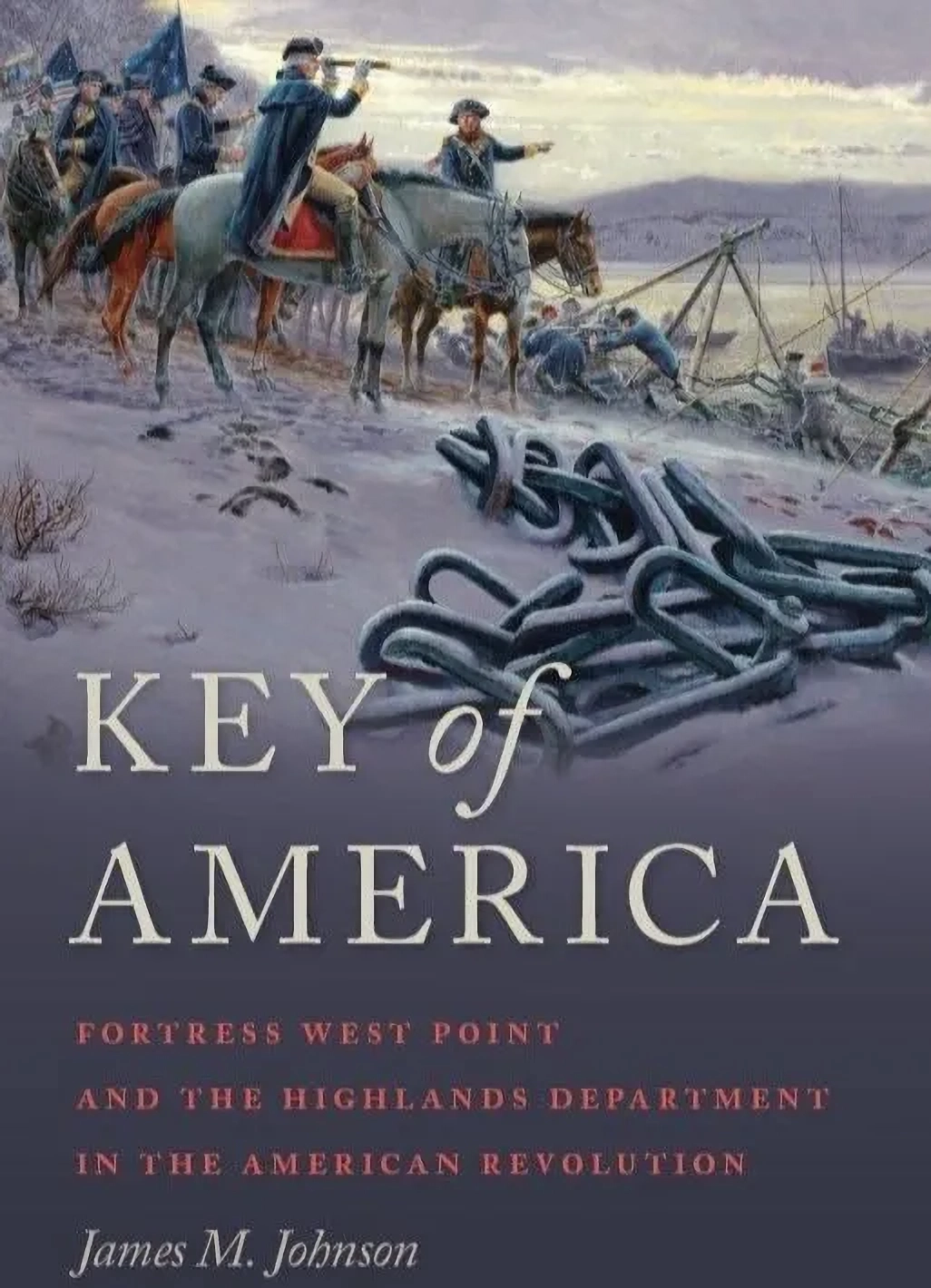
KEY of AMERICA: FORTRESS WEST POINT AND THE HIGHLANDS DEPARTMENT IN THE AMERICAN REVOLUTION
As the nation approaches the 250th anniversary of American independence, The West Point Press is proud to publish KEY of AMERICA: FORTRESS WEST POINT AND THE HIGHLANDS DEPARTMENT IN THE AMERICAN REVOLUTION by James M. Johnson, PhD, COL, US Army, Retired. This deeply researched study restores West Point’s Revolutionary-era story to its rightful place at the center of the American founding. Long before it became the home of the United States Military Academy, the West Point Military Reservation—set along the Hudson River in the rugged Highlands some fifty miles north of New York City—served as a strategic linchpin in the struggle for independence.
Johnson demonstrates why George Washington regarded control of the Hudson River as essential to the survival of the Revolution. The river corridor linked New England to the mid-Atlantic colonies; its loss would have divided the rebellion geographically and politically. Washington therefore championed the fortifications at West Point throughout the war. The defensive works constructed there proved so formidable that the British ultimately declined to mount a direct assault. Drawing on extensive archival research, Johnson details the planning, engineering, and logistical coordination required to build and supply these fortifications in a remote, heavily wooded landscape. He also illuminates the lived experience of soldiers and civilian laborers who, without modern machinery, reshaped the Highlands into a defensive network Washington famously called the “key of America.”
At a moment when public attention is turning to the Revolution and its legacy, this volume offers timely insight into the military, economic, and social dimensions of the war. It contributes to ongoing scholarship on early American state-building, wartime mobilization, and the strategic geography of the conflict, while also speaking to broader conversations about national resilience and institutional origins. For scholars, history enthusiasts, and those invested in West Point’s past, the book provides both authoritative analysis and compelling narrative.
Colonel (Ret.) James M. Johnson brings exceptional expertise to this subject. A graduate of West Point and Duke University, he taught for fifteen years in the Department of History at the US Military Academy and for eighteen years at Marist University, where he served as Emeritus Professor of History and the Dr. Frank T. Bumpus Chair in Hudson River Valley History. His honors include the French Chevalier dans l’Ordre des Palmes Académiques and the National Society of the Daughters of the American Revolution’s Medal of Honor and History Award.
Like all West Point Press titles, KEY of AMERICA is published as platinum open access, ensuring that its scholarship is freely available to readers worldwide.
Learn more about KEY of AMERICA here: https://press.westpoint.edu/books/key-of-america/.